An attentive walk: noticing nature close to home
A small invitation to look more closely at a familiar outdoor place, with room for ordinary details and consideration for other visitors.
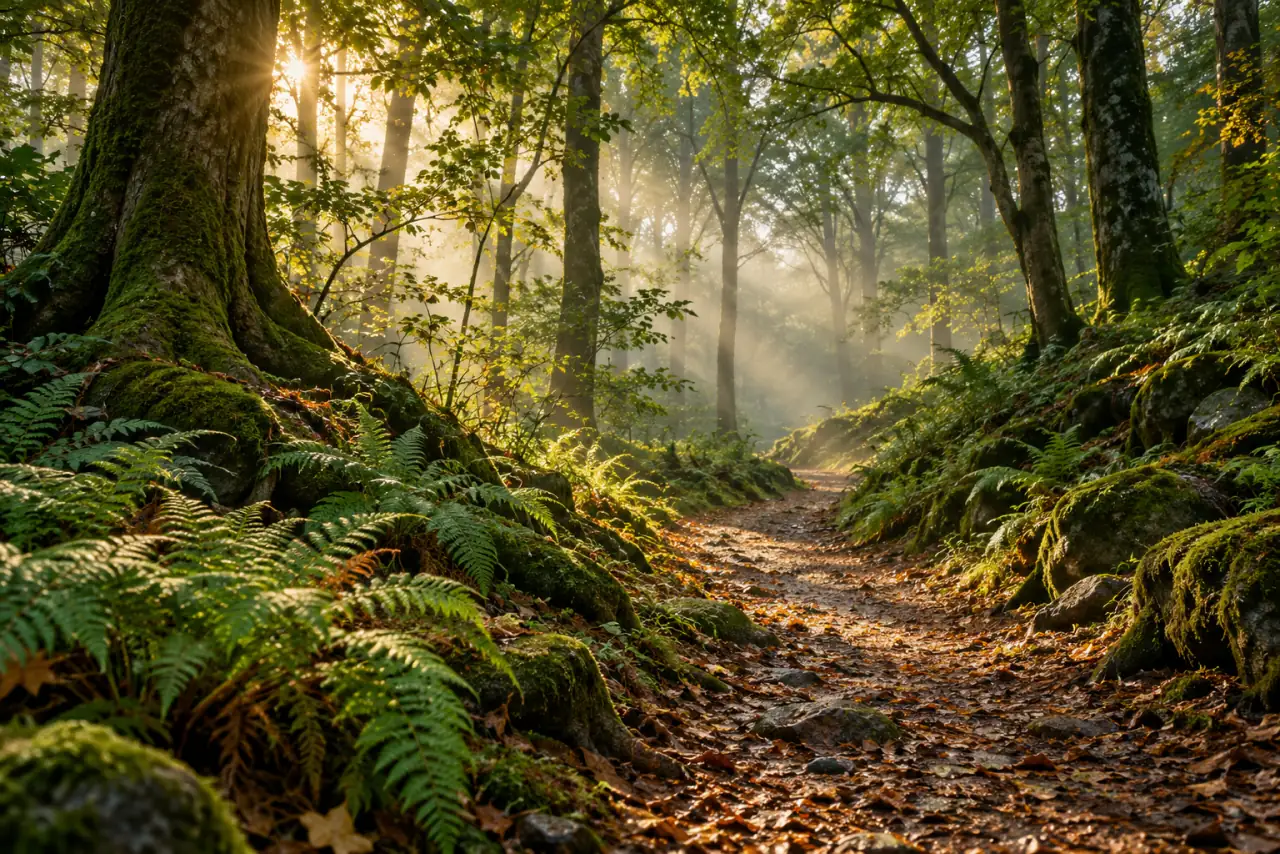
Choose a place you can actually visit
A walk with more attention does not require a remote landscape. A public garden, an accessible park path or a familiar street with trees can offer something to notice. Choose a place that suits the weather, the daylight, the time you have and your access needs. The useful starting point is a visit you can comfortably arrange.
Give the outing a modest shape. Perhaps you will follow one short path or spend a little time beside a public planting bed. If walking is not an option, a suitable outdoor seat can provide a place for the same observation. There is no distance target or required feeling to achieve.
Notice one detail at a time
Begin with a detail that is already in view: the edge of a leaf, a patch of bark or the pattern of light on a wall. Describe it to yourself with ordinary words. A pale line, a rough surface or a moving shadow is enough. You do not need the correct species name to start paying attention.
Then let the wider setting return. Notice the path, other people, bicycles or changing weather. Attention to a leaf should still leave room for awareness of your surroundings. You can pause somewhere appropriate when a detail invites a longer look, without blocking a route or stepping into a planted area.
Use a question instead of a checklist
One question can give a familiar place a fresh angle. What has changed since the last visit? Where does the shade begin? Which sounds seem close and which seem distant? Choose whichever question interests you and leave the others for another day. The point is to observe a place, rather than complete a collection of exercises.
If your thoughts move elsewhere, simply return to something you can see. There is no need to grade the quality of your concentration or turn every interruption into a lesson. An ordinary outing may include planning dinner, greeting a neighbour and looking closely at a seed head within the same few minutes.
Make observation considerate
The US National Park Service's Leave No Trace guidance encourages visitors to plan ahead, use appropriate established routes, take waste away, leave natural objects in place and give wildlife space. Local rules and conditions should guide each visit. A quiet encounter is more worthwhile when the place remains available to the next person and the animals that live there.
Let a photograph be optional. Before reaching for a camera, consider whether you would rather keep looking. If you do take a picture, respect other people's privacy and avoid approaching wildlife to improve the frame. The memory can also be a few words written later, with nothing collected or removed.
Return without demanding a transformation
At home, record one concrete observation if you want to remember it. You might write that the pavement smelled of rain or that the leaves beside a gate had turned yellow. A specific detail will tell you more about that afternoon than a general declaration that you felt connected to nature.
You can revisit the same route and allow repetition to become part of the interest. Some days the changes will be obvious; on others, very little will catch your eye. Both belong to an ongoing acquaintance with a place. The invitation is simply to notice what is there and leave room to look again.
Sources & further reading
These references support the discussion and offer context for further reading.