A tree phenology journal: following one tree through its year
Give one tree a notebook ID, choose features you can see repeatedly and keep a dated record of buds, leaves, fruit and color within the same view.
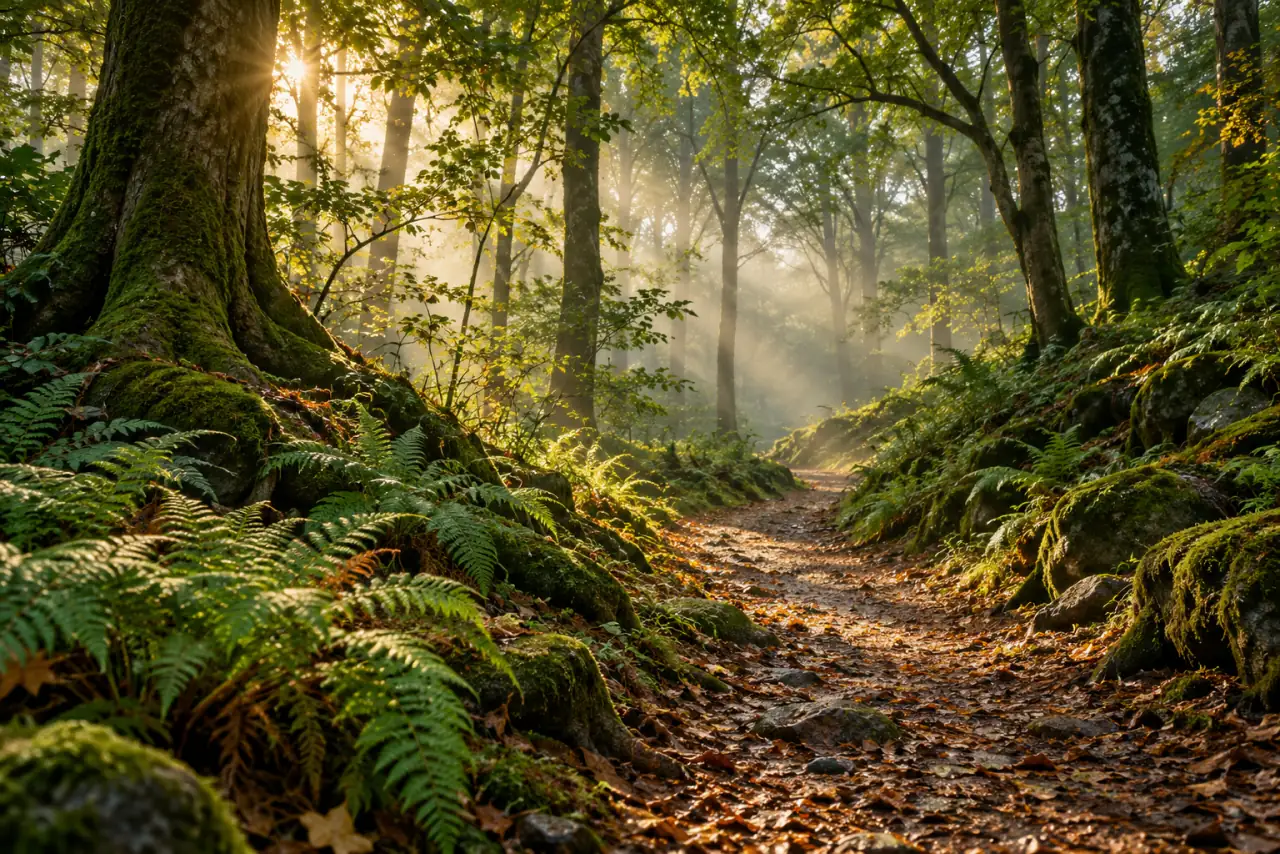
Choose one tree you can recognize on every visit
A tree phenology journal tracks visible stages of one tree over a year. Give the tree a notebook ID, choose a view you can return to and write a few questions about changes you can actually see. At each visit, record the date and answer each question separately. Use yes for a stage you can see, no when you had a clear view and found none in the area you checked, and unknown when the view was inconclusive. Leave missed visits visible in the record.
Pick a tree you pass regularly and can observe from an appropriate place. Write an identifier such as Tree 1 and add two details that help you find the individual after its appearance changes. You could describe the fork in the trunk and its position relative to an established path. A quick sketch of the trunk, path edge and nearest neighboring trunk helps when two trees look similar. Keep the identifier in the notebook. The tree itself can stay as you found it.
Add the species if you know it and note where that name came from, such as a labeled tree in a public garden. You can also begin with a name like Tree 1, species uncertain, and use plain visual descriptions. If you verify the species later, add it with the date and the source of your check. Keep the same identifier so your older observations still refer to the same individual.
If the tree is replaced or you discover that your notes refer to two different individuals, give each tree its own record from that point. Keep the entries whose identity you can establish with the correct tree, and leave unclear entries marked as such. The next tree you follow can start with its own identifier and baseline view.
For the broader idea of tracking when living things change, read Phenology for beginners: understanding the timing of nature.
Mark which branches you can actually see
At the first visit, decide which part of the tree you will check for every entry. A low branch and its two outer twigs may be easier to compare than a whole crown with leaves at several heights. Mark that branch in the sketch and write where you stand or sit. For example, 'Lower branch extending left from the first fork, viewed from the path bend' gives you a way to find the same feature later.
Use the same observation area for the questions on your page. If you look up and see color in the top of the crown, you can add that as a separate note labeled top of crown. A yes for the low branch still refers to the low branch. If you alternate between a branch one week and the whole visible crown the next, the answers may look different simply because you checked different parts.
Add a note when the view changes. A branch can become hidden behind new foliage, or a path closure can shift where you look from. If you can still see the same area clearly from an appropriate spot, describe the new view beside the date. If you switch to another branch, give it a new label and start a separate set of entries. Mark the original branch as out of view or discontinued so you know why those entries end.
Write a separate question for each visible stage
Choose a few questions suited to the tree. For a red maple, examples are 'Is a leaf tip showing at a bud before the leaf unfolds?', 'Can I see an unfolded live leaf?', 'Can I see paired winged fruits still attached?' and 'Can I see leaves changing to their late-season colors?' Each question names something you can look for repeatedly. If the tree is high or the fruit is hard to distinguish, choose only the details you can check reliably.
The USA National Phenology Network’s red maple profile describes these as separate stages to monitor and explains what the fruits look like. A companion photo guide prepared by the Scarsdale Public Schools CHOICE Program and vetted by the network gives images of buds, leaves, fruit and color. Use the examples to decide what you can distinguish from your position. If a pale or red patch at a twig end is too small to identify, describe the patch and leave the question open.
More than one answer can be yes on the same date. An unfolded leaf on one twig and a leaf tip starting to show at a different bud can both be visible. Later in the year, a branch may carry both green leaves and leaves changing color. Give each stage its own line so you can describe what was happening together. Leave buds, leaves and fruits in place as you observe them.
For a different kind of tree, keep the questions tied to what you can recognize. If you can see new growth at the tips of an evergreen but cannot judge changes in the older foliage, keep a question about those tips. A locally appropriate guide can help you choose terms. Once you set up a question, use the same visual cue from one visit to the next and write down any change you make.
For adding a short description or a sketch to the same page, see How to start a nature journal without collecting anything.
Keep yes, no, unknown and missed visits distinct
Nature’s Notebook, the USA National Phenology Network’s monitoring program, distinguishes yes, no and uncertain for stages on an individual plant. It leaves a stage unanswered when the observer did not check it. You can adapt the idea to a private journal by writing the answers in words and including the area you checked. To contribute to a program, follow its species definitions and observation instructions for the individual plant.
Say 'No, on the checked branch' when you looked specifically for a feature and had a clear enough view. Use 'Unknown, branch partly hidden' if you tried to check but could not judge it. If you looked only at leaves that day, a fruit entry can say 'Not checked.' If you did not visit the tree at all, use one line for the missed visit and leave the stage answers open.
Put the reason next to the answer. On a visit with poor visibility, you may still see an unfolded leaf and be unable to tell whether the soft outline beside it is a fruit. Enter the observations you can support for that date. A clear view on the next visit can resolve today’s question about what the feature looks like. Keep the earlier uncertainty alongside the newer entry.
Make a page you can return to throughout the year
Use one header for the tree and one short entry per visit. Write the questions down in a fixed order so you can scan the record later. Pick a repeat day that fits a route you already use. An extra visit can help when a feature is changing quickly and you can return easily. If you miss the planned day, record the next actual visit and retain the gap.
Here is a compact set of fields for a private tree journal. Keep the same wording for questions whose meaning stays the same. Add the date and explanation when a question or observation area changes.
- Tree ID and species if known. Add the source of the identification and a sketch or description that distinguishes the tree.
- Usual viewing position and branch label. Name the part you will observe within that view.
- Visit date and view conditions. Note any change of position, obstruction or incomplete observation.
- One answer per stage. Add a short detail for any yes, no, unknown or unchecked entry that may be hard to interpret later.
- Revisit note. Write which question needs a clearer view, or note that the planned visit was missed.
A fictional red maple record through several seasons
Imagine a red maple labeled Tree 1, identified by a sign in a public garden. The observer uses the same low branch above a path bend for four questions, in this order. Are leaf tips showing at still-opening buds? Are unfolded live leaves visible? Are paired winged fruits attached? Are leaves changing to their late-season colors? The dates below are invented for this notebook example.
April 18. The branch is unobstructed. Buds opening, yes. Two have leaf tips showing. Unfolded leaves, no. Attached fruits, unknown because shapes behind a twig are too small to judge. Color change, no on the checked branch. April 25. Buds opening, yes on one twig. Unfolded leaves, yes on the next twig. Attached fruits, yes, paired winged shapes visible on the branch. Color change, no.
May 2. Planned visit missed. May 9. Buds opening, no on the branch. Unfolded leaves, yes. Attached fruits, unknown because the leaves now cover the part of the branch that held the fruit in the earlier view. Color change, no among the leaves visible. The April fruit observation stays on the page, and the May entry leaves the question open.
October 16. The usual path bend is closed. From an open path farther away, the observer sees colored leaves in the upper crown but cannot see the chosen branch clearly. The crown observation goes in a separate note. The branch answers stay unknown for that visit. October 23. Back at the usual view, unfolded leaves and color change are both visible on the branch. There are green and red leaves together. The observer skips buds and fruits on that visit and marks both as not checked.
Read the year back one feature at a time
At the end of the year, pull out the entries that cover the same tree and the same branch. Read down one question at a time, then look across a date for features you could see together. In the fictional record, the April 25 entry can show buds opening alongside unfolded leaves and attached fruit. The October 16 crown note has its own value, and the scope label keeps it separate from the usual branch view.
Make a short summary with the dates you actually have. For example, 'Attached fruit visible on April 25. Visit missed May 2. Fruit area hidden May 9.' A summary like that preserves the usable observation and the two gaps. If a stage was hard to see in most visits, change the question or choose a more suitable observation area for the next year. Record the change at the top of the new page.
Keep the tree ID, branch sketch and questions together. When you compare years later, you can check whether you were following the same part of the same tree and whether you looked at similar intervals. One tree gives you a record of a particular place and individual. The dates, different viewpoints and unknowns tell you how much of that record you can compare.
Before you turn the page, decide whether to keep the same set of questions next year. If fruit was usually hidden, you can retain the leaf record and begin a separate fruit record for a different visible branch of the same tree. Label the new branch and date that decision so you can read the records side by side without combining their answers.
For a separate set of prompts about the wider view during your local winter, see Winter nature journal prompts for your own local season.
Sources & further reading
These references support the discussion and offer context for further reading.
- USA National Phenology Network: Nature’s Notebook Documentationwww.usanpn.org
- USA National Phenology Network: Nature’s Notebook Red Maple Profilenaturesnotebook.usanpn.org
- USA National Phenology Network: Red Maple Phenophase Photo Guide (2019 PDF)www.usanpn.org